Somalia chaired the UN Security Council — and collapsed politically the same week. This is not coincidence.
Somalia’s first time presiding over the United Nations Security Council since 1972 should have been a moment of national rehabilitation. Instead, it became a case study in contradiction — a symbolic elevation abroad paired with institutional decay at home.
On Monday, Somalia assumed the rotating presidency of the United Nations Security Council, convening a high-level session on the promotion of the rule of law. The meeting was briefed by António Guterres, African Union Commission Chair Mahmoud Ali Youssouf, and former International Court of Justice judge Abdulqawi Yusuf.
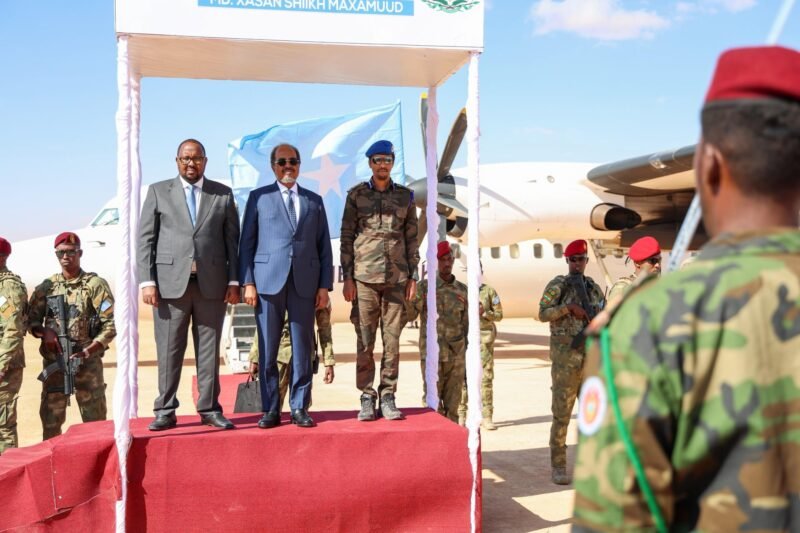
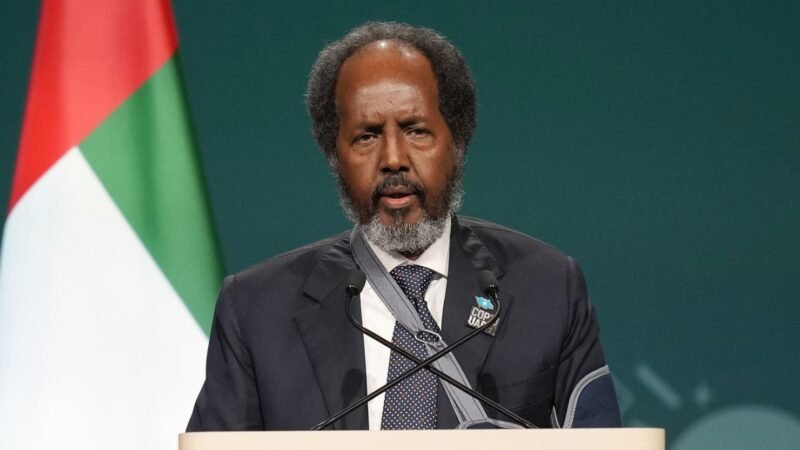
Yet the man who was supposed to personify this milestone — President Hassan Sheikh Mohamud — was conspicuously absent.
According to diplomatic sources, Hassan Sheikh was denied a U.S. visa and failed to attend Somalia’s most important multilateral appearance in half a century. In his place, Somalia’s UN ambassador, Abukar Dahir Osman, chaired the session. Formally, the event went ahead. Substantively, the absence spoke louder than any speech.
It was an embarrassment sharpened by timing.
Just days earlier, Somalia admitted responsibility for the theft of World Food Programme food aid from a warehouse at Mogadishu airport — aid funded largely by the United States and intended for starving civilians amid drought and climate shocks. The admission came only after Washington suspended assistance and demanded accountability. That stolen food was not abstract humanitarian loss; it was bread taken from the mouths of the hungry.
The optics were devastating. Somalia chaired a UN meeting on the rule of law while conceding it could not safeguard emergency food aid, and while its president reportedly failed to clear U.S. immigration scrutiny. Adding to the sting, the U.S. president had recently described Somalia as a “stateless place” — language Mogadishu publicly rejected, but privately reinforced through dysfunction.
Then came the implosion at home.
On the same day Somalia sought to project statesmanship abroad, its parliament descended into chaos. A joint session of both houses of the Somali Federal Parliament collapsed after shouting, bottle-banging, and physical violence erupted over a proposed constitutional amendment.
The agenda — amending Chapters 5 and 9 of the provisional constitution — was rejected outright by opposition lawmakers, who argued that with barely three and a half months left in the president’s term, any constitutional change would be illegitimate. The Speaker of the Upper House, Abdi Hashi Abdullahi, did not attend, underscoring deep institutional fractures.
The session disintegrated into fistfights. MPs traded blows. Threats were issued openly. One lawmaker warned that if Speaker Sheikh Aden Madoobe persisted with “unpopular agendas,” he would be removed from office. The parliament — with cameras rolling — became a physical battleground.
This convergence of events is not accidental. It reveals a system trapped in performative legitimacy: capable of occupying international chairs, yet unable to enforce order, consensus, or accountability at home. Somalia’s leadership speaks fluently in the language of multilateralism while failing the most basic tests of governance — food security, parliamentary procedure, and constitutional restraint.
Somalia’s UN presidency was described by its mission as “historic.” That is true. But history does not record symbolism alone. It records credibility.
On this dark day, Somalia demonstrated that prestige without discipline is hollow — and that the distance between the UN chamber and chaos in Mogadishu is far shorter than officials care to admit.