Irro’s Cabinet Signals Governance Shift as Somaliland Moves From Recognition Campaign to Statecraft.
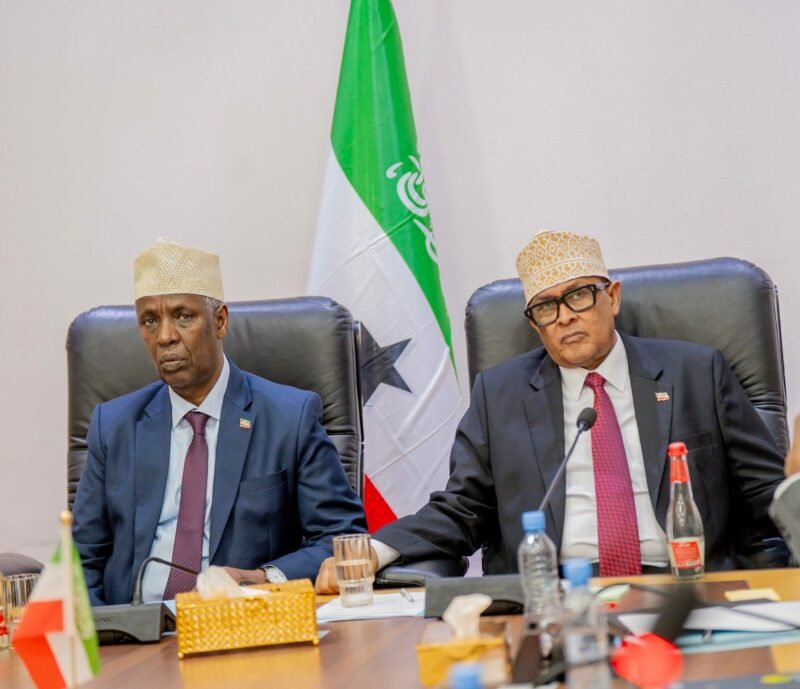
Inside the Somaliland Presidential Palace in Hargeisa, the 52nd session of the Council of Ministers carried a tone markedly different from past cabinets shaped by diplomatic aspiration. This was not a government pleading for acknowledgment, but one organizing itself to wield it.
Presiding over the meeting, President Abdirahman Mohamed Abdullahi (Irro) convened a cabinet that increasingly resembles a state preparing for sustained international engagement. The agenda was sober and technical: internal security, fiscal discipline, institutional coordination, and public communication. These are not the rituals of symbolic politics. They are the mechanics of sovereignty.
The security briefing set the tone. Interior and National Security Minister Abdalla Mohamed Arab described Somaliland as secure “at all levels,” but introduced a notable recalibration in language. Diplomatic progress, he warned, has expanded Somaliland’s circle of adversaries. Recognition, in this framing, is not an endpoint but a multiplier of risk. The call for tighter cooperation between institutions and citizens reflects an administration that sees internal cohesion as the first line of defense for external legitimacy.
If security is the shield, finance is the engine. Finance Minister Abdullahi Hassan Adan reported that January 2026 revenue targets are being met—an early but essential signal to international partners assessing Somaliland’s economic credibility. More consequential than the figures themselves was the rollout of a unified government accounting system. By standardizing financial records across ministries and training staff through the National Institute of Accounting, the Irro administration is moving to dismantle the fragmentation that has long undermined state efficiency.
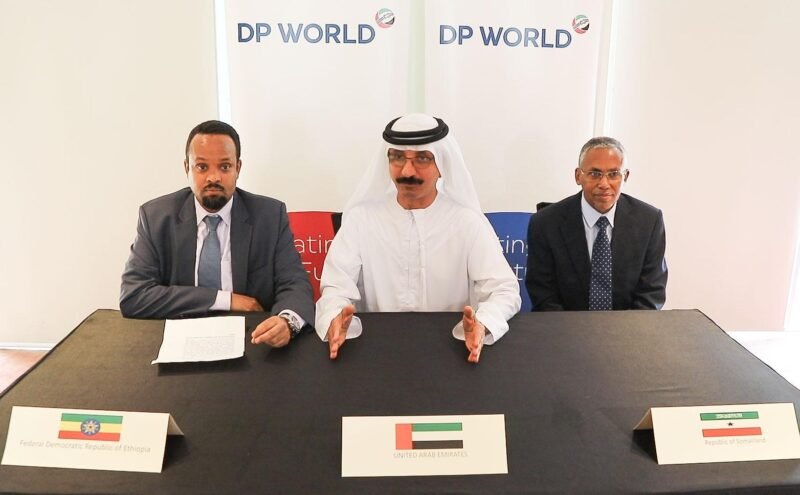
This push is inseparable from Somaliland’s economic spine: the Berbera corridor. Continued expansion of the port, in partnership with DP World, remains the centerpiece of national economic strategy. In cabinet discourse, Berbera is no longer just infrastructure—it is leverage, anchoring Somaliland’s relevance to Red Sea trade and regional supply chains.
Beyond hard security and finance, the session addressed the quieter infrastructures that sustain statehood. Education Minister Ismail Duale Yusuf outlined preparations for the 8th Joint Education Sector Review, emphasizing equitable access and modern technology. The message was clear: recognition without human capital is hollow.
Health Minister Dr. Hussein Bashir Hirsi detailed a rapid response to fever outbreaks in multiple regions, deploying medicines and medical personnel. The subtext was unmistakable—state capacity must be visible not only in diplomacy, but in emergencies that test public trust.
Regional balance emerged as another strategic priority. Minister Kaltun Sh. Hassan Abdi introduced a Regional Development Framework aimed at ensuring that the dividends of recognition reach beyond Hargeisa. In a political system where marginalization can quickly become destabilizing, balanced development is not charity; it is risk management.
Perhaps the most revealing intervention came from Minister of the Presidency Khadar Hussein Abdi, who pressed for a “unified voice” across government. In a media environment saturated with misinformation, the administration plans structured communication training for senior officials. This is not about spin. It is about narrative discipline at a moment when contradictions can be exploited by opponents of Somaliland’s statehood.
As the session closed, President Irro returned to first principles. Recognition, he said, is a national goal rooted in self-determination—but it must be defended through competence. Accounting systems, regional planning, crisis response, and message coherence are now instruments of diplomacy.
The signal from the 52nd Council of Ministers was unmistakable. Somaliland is no longer merely arguing that it deserves recognition. Under Irro, it is behaving like a state that expects to be judged by how it governs once it has it.