The Warmth of Hell and The Cold of the Dream.
Mahad Mohamud, a 36-year-old former Uber driver and asylum seeker, known to his 500,000 global followers as Garyaqaan, is slowly adjusting to the conditions in Mogadishu. Not just the physical conditions—the debilitating heat replacing the cold Minnesota autumn—but the condition of being an exile.
His journey started a decade ago, chasing the American Dream across three continents and one border wall. He finally found safety, stability, and even digital celebrity in Minneapolis. But now, after being stripped of his freedom, his career, and his future in a six-month detention ordeal, he is back where his life is most threatened.
The question isn’t how he made it to the US; it’s how a global digital celebrity, a self-proclaimed lawyer, and a successful asylum applicant became a priority for deportation. The answer is a chilling case study in how digital rivalry can manipulate global politics to deliver devastating, life-altering results.
The Smokescreen of the Accusation
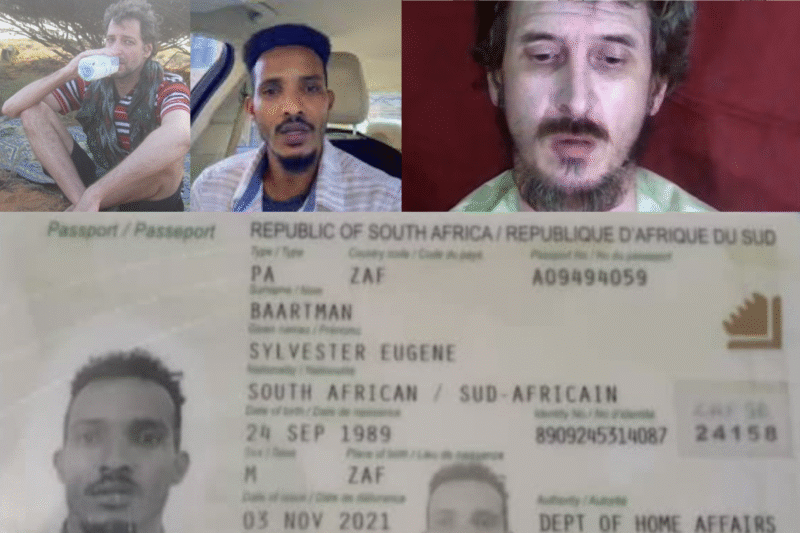
What priority could immigration authorities possibly place on a working father with a pending asylum case? The official story, told to Mahad by ICE agents who ambushed him in his Minneapolis parking lot, contained two charges: illegal entry (the expected crime) and a highly improbable, politically charged claim: involvement in the kidnapping of French citizens from a Mogadishu hotel.
The accusation was amplified by “Rapid Response 47,” a White House-affiliated network with an active social media presence, labeling Garyaqaan a “criminal and worthless idiot.”
The Contradiction: Garyaqaan, a digital activist, adamantly denied the claim, stating he wasn’t even in Mogadishu at the time. Crucially, he noted that the FBI investigated the kidnapping charges in the US, questioned him, and subsequently released him. The case was dropped.
The Pacing of Dehumanization
The journey from the ‘land of dreams’ to the unforgiving reality of a deportation flight is structured like a descent into the arbitrary power of the state.
Mahad’s decade-long saga—crossing borders, enduring torture in South Africa, navigating the US-Mexico wall, and being granted a temporary work permit—is the classic migration narrative.
The Silent Operation of Vengeance
Mahad believes the ICE raid was prompted by a social media rival who simply tipped them off to his address. This is the horrifying pivot: the official process (FBI investigation, asylum filing) was circumvented by a politically charged, personal attack.
His detention became a cruel, protracted countdown: three months waiting for the asylum decision (denied), and another three months waiting for the deportation flight. He was transferred to a prison in Willmar, Minnesota, held for six months, and then processed through a group of 39 deportees from East Africa.
The process signaled a definitive, non-negotiable end, independent of the facts.
The Reunion and The New Fear
After a decade of separation, Mahad was reunited with his three children in Mogadishu. This moment, which he says he “wouldn’t trade… for anything,” is the validation of his entire treacherous journey. It is the human payoff.
He is forced to live in a “highly secured” home, taking “extra precautions” whenever he goes out. His visibility—the source of his fame and income—is now the source of his immediate, existential danger. He has become a case study in how the confluence of digital advocacy and political enforcement can make life unlivable.
A Case Study in Digital Vulnerability
As someone who tracks global strategy, I have observed that digital communities, while powerful, are also deeply vulnerable to targeted political action. Mahad’s story is a stark reminder to every diaspora advocate: when your visibility becomes a threat to powerful domestic or international interests, your digital footprint is no longer a shield—it’s a target map.
This isn’t just Mahad’s tragedy; it’s a systematic disruption impacting tens of thousands.
The contrast between Mahad’s warm welcome by local politicians, who value his half-million-follower reach, and the plight of the anonymous deportees—like the man who lost his $20,000 journey and now faces a complete lack of opportunity—is striking. It proves that only celebrity offers a slight, temporary cushion; competence and compliance offer none.
Mahad’s ordeal, and the widespread fear gripping the community, serves as a crucial strategic insight:
The Somali diaspora is an asset with immense human capital. When one of its own—a lawyer, a cultural icon, and a political voice—is treated as a criminal priority based on dismissed charges and political rivalry, it sends a clear message that the US system is currently prioritizing political rhetoric over objective justice and humanitarian needs.
This case is not just about one man’s deportation; it is about the weaponization of an immigration system to address digital rivalry and political narratives. We must demand: