Carriers move, threats fly, and diplomacy narrows—Washington and Tehran are back on a collision course.
President Donald Trump has placed Iran back at the center of U.S. foreign policy brinkmanship, issuing a stark warning that “time is running out” for Tehran to accept a nuclear deal, even as American naval power moves deeper into Middle Eastern waters.
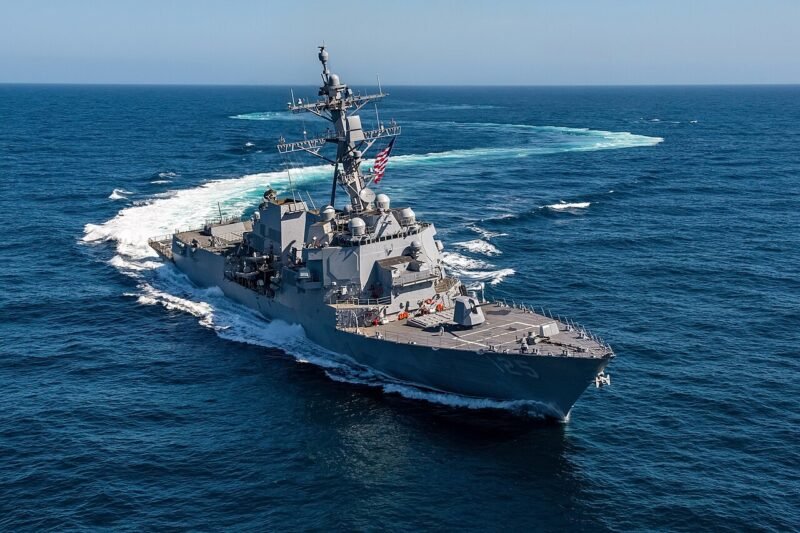
In a social media post on Wednesday, Trump urged Iran to “come to the table” and negotiate an agreement that would permanently bar it from acquiring nuclear weapons. The message was accompanied by an unmistakable threat: a “massive armada” was heading toward the region, and failure to comply would invite consequences “far worse” than previous U.S. strikes.
Trump explicitly referenced “Operation Midnight Hammer,” the U.S. military action carried out during last year’s brief but intense war between Iran and Israel. The implication was clear. Diplomacy remains an option, but it is now framed as a final opportunity rather than an open-ended process.
Iran’s response was swift and defiant. Foreign Minister Abbas Araghchi rejected negotiations conducted under military threat, saying such an approach could not produce meaningful results. While reiterating Iran’s willingness to accept a “fair and equitable” nuclear deal, he insisted it must be free of coercion and respect Tehran’s right to peaceful nuclear technology. Any aggression, he warned, would be met with an immediate and forceful response.
Iran’s mission to the United Nations echoed that message, invoking the heavy costs of past U.S. wars in Afghanistan and Iraq and cautioning Washington against repeating what it described as historic strategic blunders.
This is the second time this year Trump has openly threatened military action against Iran. Earlier warnings were tied to mass protests shaking the Iranian regime, with Trump claiming he would intervene if demonstrators were executed. That threat was later softened, and Tehran denied U.S. assertions that executions had been halted. Rights groups say the death toll among protesters has continued to rise.
The latest escalation is also reverberating across Europe. German Chancellor Friedrich Merz said Wednesday that the Iranian government’s “days are numbered,” arguing that it survives only through violence and terror against its own population. France, meanwhile, has backed a push—supported by Italy—to designate Iran’s Islamic Revolutionary Guard Corps as a terrorist organization, a step that would further isolate Tehran diplomatically and economically.
At the core of the confrontation lies Iran’s nuclear program. Tehran denies it is seeking a weapon, but its uranium enrichment levels now exceed what is required for civilian energy use. Last year’s strikes on nuclear facilities were widely viewed as having limited impact on Iran’s technical progress, reinforcing concerns in Washington and European capitals that the window for preventive diplomacy may be closing.
What distinguishes this moment is tone and timing. Trump is signaling urgency, coupling diplomatic language with visible military movement and unambiguous threats. Iran, for its part, is signaling resolve—insisting it will not negotiate under duress while keeping the door open to talks on its own terms.
The result is a narrowing channel for de-escalation. Each side claims to prefer a deal. Each side warns it is prepared for confrontation. And as carriers reposition and rhetoric hardens, the standoff increasingly resembles a countdown—one in which miscalculation, not negotiation, could set the pace.