The Curse of Lasanod: Why Presidential Visits to the Sool Region are a Deadly Gamble.
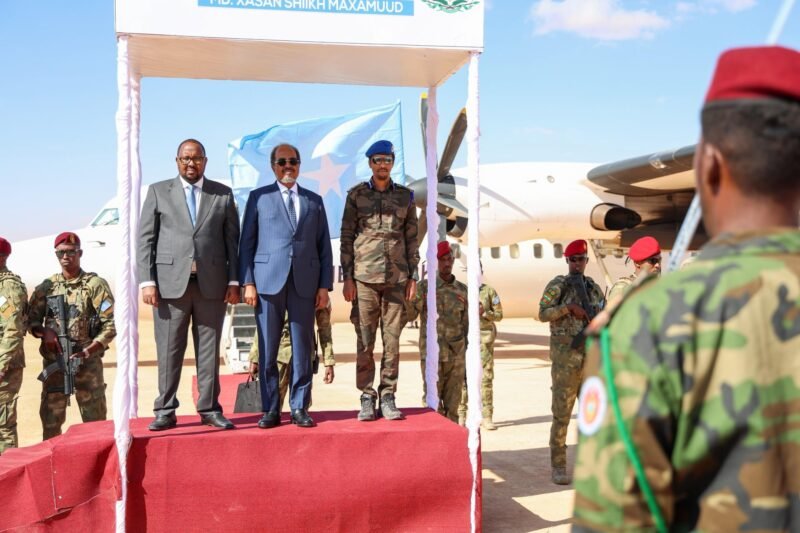
The dust has settled on the streets of Lasanod today as President Hassan Sheikh Mohamud and a massive federal delegation touched down in the heart of the Sool region, but the air remains thick with the weight of a violent history. The President’s arrival to attend the inauguration of Abdulqadir Aw Ali Firdhiye, the leader of the North-Eastern Somali Administration, marks the third time in nearly sixty years that a national leader has dared to make this trek. It is a city that has hosted Somali leaders for centuries, long before it was formally designated a region, and it remains a place where the echoes of British colonialism and the fierce battles of the Dervish movement still resonate. Yet, for the modern Somali presidency, Lasanod is not merely a regional capital; it is a city marked by the shadow of the ultimate political price: the assassination of a sitting president.
The security landscape surrounding this 2026 visit is perhaps the most precarious in the nation’s history. While Somali Prime Minister Hamse Barre and a high-ranking entourage of NISA directors and police chiefs have already established a presence, the optics of the visit are being viewed as a desperate show of force against the backdrop of shifting geopolitical tides. The recent recognition of Somaliland by Israel has fundamentally altered the territorial stakes, casting a long shadow over the Sool region which Somaliland claims as its own. Political analysts like Levy Andersson suggest that President Hassan is walking into a triple-pronged trap. With Al-Shabaab and ISIS maintaining active cells in the vicinity, and the overlapping interests of Israel, the UAE, and Somaliland creating a tinderbox of tension, the risk of a high-level kidnapping or assassination has reached a fever pitch. Andersson notes that the presence of Puntland units complicates the matter further, suggesting that the federal government may be vastly underestimating the “powerful allies” now backing Somaliland’s sovereignty.
History serves as a grim roadmap for the dangers inherent in this city. In October 1969, President Abdirashid Ali Sharmarke, the first Somali leader to take office through parliamentary elections, arrived in Lasanod to visit a drought-stricken population. It was supposed to be a mission of mercy and democratic solidarity. Instead, it became the site of a tragedy that ended the first era of Somali democracy. A member of his own security detail turned his weapon on the President, ending his life in the heart of the town. The fallout was catastrophic. Just six days later, as the nation was still draped in mourning, the military seized power in a coup d’état. That soldier-turned-dictator, Mohamed Siad Barre, would go on to rule for decades, but even he waited fifteen years before he dared to set foot in the city where his predecessor fell.
When Siad Barre finally visited Lasanod in 1984, the trip was characterized by a heavy military presence and a desperate attempt to showcase development projects. It was a visit meant to signal that the “Curse of Lasanod” had been broken, yet historians now view it as a turning point that contributed to the eventual unraveling of the country’s safety. Today, as President Hassan Sheikh Mohamud stands where Sharmarke fell and Siad Barre once marched, the stakes are arguably higher. The federal government’s attempt to project authority in a region now recognized by international powers as part of Somaliland’s borders is being characterized by some as a direct provocation of war. Whether this visit will be remembered as a bold diplomatic success or the catalyst for a new cycle of violence remains to be seen, but in a city defined by the assassinations of the past, every step the President takes is a gamble with history.