Everybody hates the system—until their name is called.
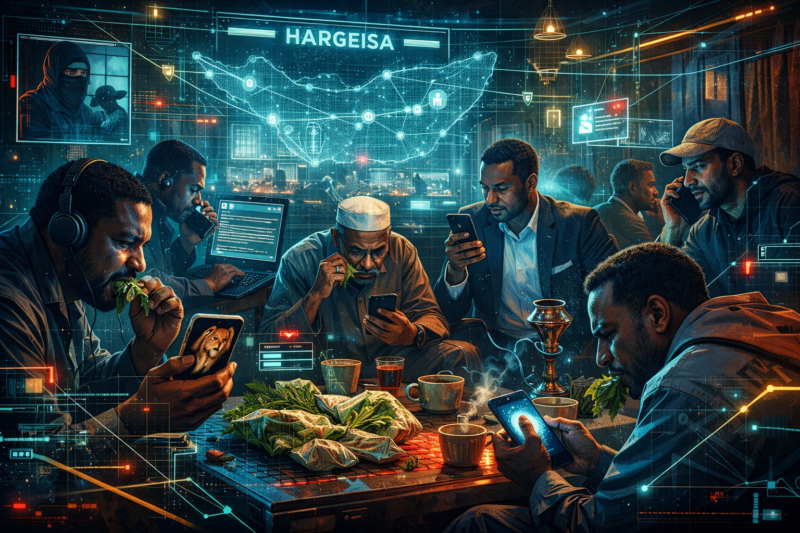
It is Thursday in Hargeisa. The streets fall unusually quiet, dust settling as doors close early and the city leans inward. Plastic bags rustle. The bitter leaf is chewed. And somewhere between the second bundle and the third cup of tea, the air thickens with a familiar scent: the reshuffle.
In other countries, a politician is a public servant. In Somaliland, a presidential appointment is a form of baptism. The moment President Abdirahman Mohamed Abdullahi “Irro” utters a name on the radio, a miracle occurs. A man who was a “useless neighbor” on Wednesday becomes an “Angel” on Thursday.
Old enemies rediscover his phone number. Men who ignored him for a decade begin praying loudly for his long life. Mosques echo with praise. TikTok fills with slow-motion edits and dramatic songs.
But as the khat turns sweet, a question hangs in the Marfish: is this an angel—or just the latest winner of the Hargeisa Lottery?
The most dangerous man in the room is the one with two phones. On one screen, a fake Facebook account—Somaliland flag profile picture, broken grammar—types furiously: “This new appointee is a thief! He knows nothing!” On the other screen, a private WhatsApp message goes out: “Excellency, I have identified the man insulting your noble family online. For $500, I will silence him.”
By the time the mirqaan peaks, the “informant” is richer, the official is reassured, and the digital enemy has been captured—on a screenshot. This is Somaliland’s cyber-economy: fake insults, expensive loyalty, and monetized outrage.
Then come the confused travelers. You see them at Egal Airport—diaspora brothers with shiny suits and loud confidence. London and Minneapolis did not work out. Uber failed. Retail failed. But tribal engineering? That they mastered. They take predatory loans just to camp in hotel lobbies, presenting themselves as “international experts.” They are poor in their pockets, rich in their claims.
They don’t want to fix health care. They want to fix their bank accounts.
As night deepens, candidates split into two tribes. The talkers—listing ministries they “deserve.” And the silent ones—staring at their phones, waiting for a vibration that could rewrite their lives. Some have sold houses for seats that may last six months. Others have traded dignity for a praise-song that ends the moment the decree changes.
If the announcement comes now, will you be the one praising the new “Angel”—or the one creating a fake Facebook account to pay for your next bundle of khat?
Share this in your Thursday group—if your internet is fast enough.