Minneapolis’ Somali Community Has Become a Crucial Base of Support for Mayor Jacob Frey.
When Minneapolis Mayor Jacob Frey walked into a packed East African event hall on election night and delivered part of his victory speech in Somali, it was not a last-minute attempt to broaden his appeal.
It was the culmination of a relationship that has shaped his political life for more than a decade — and one that helped him defeat his top challenger, state Sen. Omar Fateh, the first Somali American elected to the Minnesota Legislature.
While neither campaign can quantify the exact vote breakdown among Somali American residents, both acknowledge that Frey secured a meaningful share of the community’s support, despite Fateh’s deep roots within it.
The dynamic underscored a campaign season in which two well-known figures — one a member of Minnesota’s growing Somali political class, the other a longtime ally of East African Minnesotans — competed for the backing of one of the city’s most influential voting blocs.
Frey’s ties to Somali communities stretch back to his childhood in northern Virginia, where he grew up in neighborhoods with large East African populations. As a young runner, he once spotted world-champion Somali miler Abdi Bile on a jogging trail and ran beside him in awe.
Years later, after Frey moved to Minneapolis and entered local politics, Bile reconnected with him — a reunion that evolved into friendship.
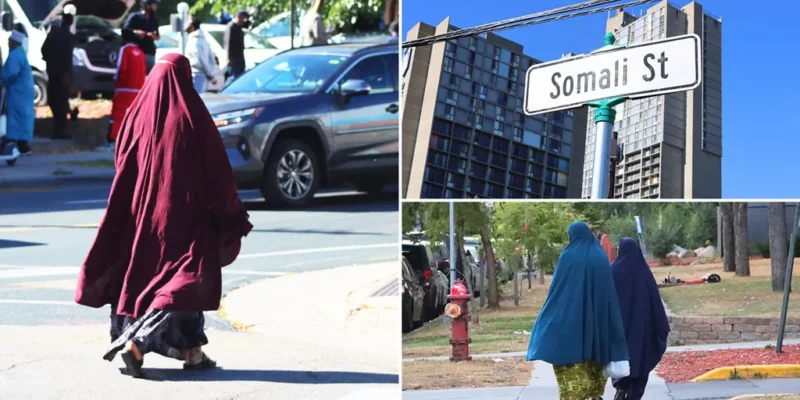
By then, Frey had already developed a strong presence in Minneapolis’ Somali neighborhoods, long before he ever sought public office. Friends recall him frequenting cafés, attending soccer matches, and picking up conversational Somali phrases.
Several residents still call him Yurub Farid, an affectionate nickname that blends the Arabic and Somali versions of his name.
Those connections persisted once he became mayor. Frey routinely appeared at Somali festivals, declared a Somali Culture Day, and worked with community leaders on issues ranging from public safety to housing.
His support for an ordinance allowing mosques to broadcast the Islamic call to prayer at any hour won him praise from local imams and elders.
As the 2024 mayoral race intensified, both campaigns saw the Somali vote as indispensable. Fateh, who grew up near Frey in Virginia, leaned on his political résumé and identity as the son of Somali immigrants.
Frey countered with organization: a dedicated East African campaign team, satellite offices in Cedar-Riverside, and endorsements from prominent Somali American leaders who argued that public safety, housing affordability, and representation mattered more than clan or ethnic ties.
“It showed the community we are not a monolithic group,” said Mohamed Omar, the former chair of the Hennepin Healthcare board. “We were willing to judge both candidates on their plans, not their background.”
Frey’s campaign also benefited from waves of social-media support, including posts from Somali hip-hop star Ilkacase Qays, who urged followers to back the mayor in the race’s final days.
After the election, some online commentators framed the outcome as a reflection of divisions between Somali clans.
Community leaders in Minneapolis rejected that interpretation, attributing it instead to spirited political debate — and to narratives pushed by influencers abroad. “People had strong opinions, but the discussions were mostly civil,” said Cedar-Riverside activist Abdirizak Bihi.
Others cautioned that Frey must remain sensitive to how community outreach intersects with clan identity. Ward 6 Council Member Jamal Osman said that while he does not believe the mayor tried to exploit internal divisions, he should take care to avoid doing so inadvertently.
In his final remarks to Somali American supporters on election night, Frey acknowledged the emotional toll of the campaign and struck a conciliatory note.
“This election is a moment for unity,” he told the crowd. “A moment where the Somali community can come together and say: This is our people. This is our city. We stand together.”